AI-Powered Phishing: The New Frontier of Social Engineering Attacks
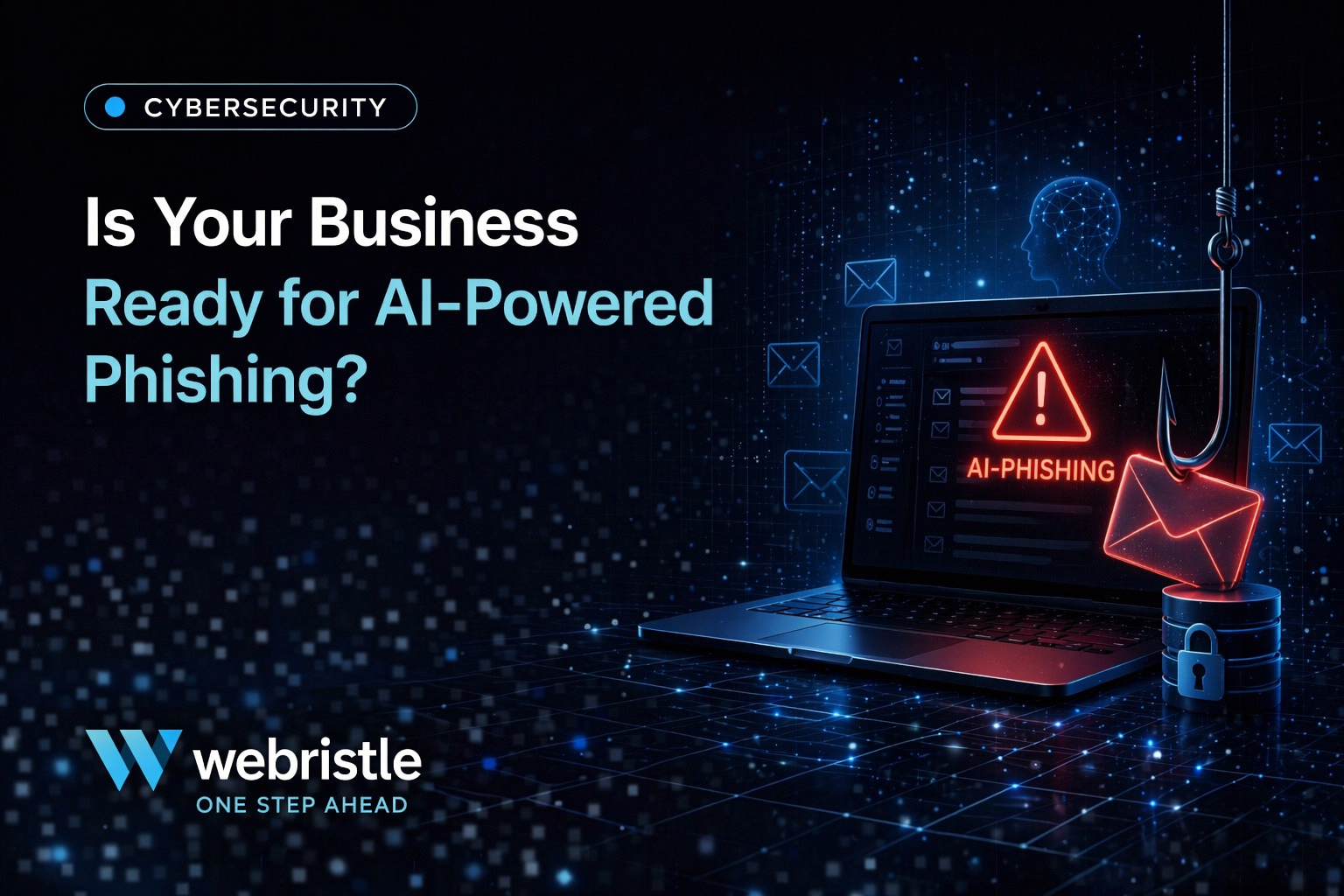
Phishing has always been one of the most effective weapons in a cybercriminal's arsenal. But something has changed dramatically in the past two years. With the widespread availability of advanced artificial intelligence tools, phishing attacks have evolved from clumsy, obvious scams into highly sophisticated, personalized threats that can fool even experienced professionals. For small and medium-sized businesses (SMBs), this shift represents one of the most serious and underappreciated cybersecurity risks of our time.
This article explains how AI-powered phishing works, why it is so much more dangerous than traditional phishing, and — most importantly — what your business can do right now to recognize and defend against it.
What Is AI-Powered Phishing?
Traditional phishing attacks were often easy to spot. Broken English, generic greetings like "Dear Customer," suspicious links, and poorly designed email layouts were telltale signs that something was wrong. Cybercriminals relied on volume: send millions of emails and hope that a small percentage of recipients click.
AI-powered phishing is fundamentally different. Using large language models (LLMs), machine learning, and data harvested from social media and public sources, attackers can now:
- Generate perfectly written, grammatically flawless messages in any language
- Personalize content based on the victim's role, recent activity, relationships, and interests
- Mimic the writing style of a known colleague, manager, or business partner
- Automate spear phishing at scale, combining precision targeting with high volume
- Adapt in real time to responses, creating convincing multi-turn email conversations
This new generation of attacks blurs the line between mass phishing and highly targeted spear phishing, making both more dangerous than ever before.
How Attackers Use AI to Craft Convincing Attacks
Data Harvesting and Profiling
Before sending a single message, AI systems can scrape vast amounts of publicly available information about a target. LinkedIn profiles reveal job titles, responsibilities, and professional connections. Twitter and Facebook expose personal interests and communication styles. Company websites list executives, recent news, and business relationships. AI can process all of this data in seconds to build a detailed profile of a potential victim.
Hyper-Personalized Messages
Using that profile, AI tools generate messages that feel genuinely personal. Instead of a generic "click here to verify your account," an attacker might send a message referencing a specific project the victim posted about on LinkedIn, mentioning a colleague by name, and mimicking the informal tone typical of internal communications. The result is an email that feels completely legitimate — because it reads exactly like one.
Voice and Video Deepfakes
AI-powered phishing has expanded beyond email. Voice cloning technology can replicate the voice of a CEO or manager with just a few seconds of audio. Deepfake video calls are now technically feasible. In documented cases, employees have transferred significant sums of money after receiving what appeared to be a video call from their company's CFO — only to discover later it was entirely fabricated using AI.
Automated Spear Phishing Campaigns
Perhaps the most alarming development is the automation of spear phishing. Previously, crafting a targeted attack required hours of manual research. AI reduces this to seconds, allowing cybercriminals to launch thousands of highly personalized attacks simultaneously. This is sometimes called phishing at spear phishing quality — and it fundamentally changes the threat landscape for businesses of all sizes.
Why SMBs Are Particularly Vulnerable
Large corporations typically have dedicated security teams, advanced email filtering systems, and extensive employee training programs. Small and medium-sized businesses often lack all three. Yet they handle valuable data — customer records, financial information, supplier contracts — that makes them attractive targets.
Additionally, SMBs tend to have less formal internal communication protocols. Employees may be accustomed to receiving direct requests from executives via email without following strict verification procedures, making them easier to manipulate. The trust-based, informal culture that makes small businesses efficient can also make them more vulnerable.
How to Recognize AI-Powered Phishing Attacks
Because these attacks are designed to be convincing, recognition is harder than ever. However, there are still warning signs to watch for:
Red Flags in Email Communications
- Unexpected urgency: Messages that pressure you to act immediately, bypass normal procedures, or keep something confidential
- Unusual requests: Wire transfers, gift card purchases, or credential sharing that fall outside standard business processes
- Slight domain variations: Email addresses like [email protected] instead of [email protected]
- Contextual inconsistencies: Details that are almost right but slightly off — wrong dates, project names, or titles
- Requests that skip normal channels: Being asked to handle something privately rather than through official systems
Red Flags in Voice and Video Communications
- Unnatural pauses or slightly robotic speech patterns
- Visual glitches, blurring around facial edges, or unnatural blinking in video calls
- Calls that come from unexpected numbers or platforms
- Pressure to act immediately without time to verify through a separate channel
Practical Defense Strategies for SMBs
Defending against AI-powered phishing requires a multi-layered approach. No single tool or policy is sufficient on its own. Here is a practical framework that SMBs can begin implementing today:
1. Implement Multi-Factor Authentication (MFA) Everywhere
Even if an attacker successfully steals a password through a phishing attack, MFA creates a critical additional barrier. Enable MFA on all business accounts — email, cloud services, banking, and any system containing sensitive data. Use authenticator apps rather than SMS codes where possible, as SMS can be intercepted.
2. Establish Verification Protocols for Sensitive Requests
Create a clear internal policy: any request involving financial transfers, access credential changes, or sensitive data sharing must be verified through a second, independent communication channel. If a request arrives by email, call the person directly on a known phone number — never reply to the suspicious email to "verify" it.
3. Train Employees Regularly — and Specifically About AI Threats
Security awareness training is more critical than ever, but it must evolve. Generic phishing training that focuses on spotting obvious errors is no longer sufficient. Employees need to understand:
- How AI can make phishing emails look perfectly legitimate
- Why personal information shared on social media increases their risk profile
- The importance of trusting their instincts — if something feels off, it probably is
- How to report suspicious messages without fear of embarrassment
4. Deploy Advanced Email Filtering Solutions
Modern email security platforms use AI themselves to detect anomalies, analyze sender behavior, and flag suspicious content. Look for solutions that offer link sandboxing, impersonation detection, and behavioral analysis. Many cloud-based options are affordable and accessible for SMBs without dedicated IT staff.
5. Limit Your Public Digital Footprint
Since AI-powered attacks rely on publicly available information, reducing what attackers can find limits their ability to craft convincing messages. Audit what your company and employees share publicly on LinkedIn, company websites, and social media. Consider whether press releases, organizational charts, or employee directories expose information that could be weaponized.
6. Create a Culture of Healthy Skepticism
This is perhaps the most important and most underestimated defense. Encourage employees to question unusual requests, even from apparent authority figures, without fear of being seen as difficult or disrespectful. A culture where it is normal to say "Let me just verify this with you by phone" is a culture that is far more resilient to social engineering.
7. Develop and Test an Incident Response Plan
Even with the best defenses, breaches can happen. Having a clear incident response plan — who to call, what to isolate, how to communicate internally and externally — dramatically reduces the damage when an attack succeeds. Test this plan at least annually with realistic scenarios.
The Evolving Threat Landscape: What to Expect Next
AI-powered phishing is not a passing trend. As AI tools become more accessible and more powerful, the attacks will become harder to detect and more widespread. Cybersecurity researchers are already documenting the use of AI agents that can conduct entire phishing campaigns autonomously — researching targets, generating content, sending messages, and responding to replies without human intervention.
Regulatory pressure is also increasing. In many jurisdictions, businesses are legally required to protect customer data and notify authorities in the event of a breach. A successful phishing attack that leads to a data breach can result in significant fines, reputational damage, and loss of customer trust — consequences that can be devastating for an SMB.
Conclusion: Awareness Is Your First Line of Defense
AI-powered phishing represents a genuine paradigm shift in cybersecurity threats. The days when a quick look at spelling and grammar was enough to spot a scam are gone. Today's attacks are sophisticated, personalized, and increasingly automated — capable of fooling even vigilant, experienced professionals.
But awareness is powerful. Understanding how these attacks work, training your team to recognize warning signs, implementing strong verification procedures, and investing in appropriate technical defenses can dramatically reduce your risk. For small and medium-sized businesses, the goal is not perfect security — it is being a harder target than the next company.
The organizations that take AI-powered phishing seriously today will be the ones still standing tomorrow. The investment in prevention is always smaller than the cost of a successful attack.