Corporate Password Security: Best Practices Every Business Must Adopt in 2026
In today's hyper-connected digital landscape, corporate password security has become one of the most critical pillars of any organization's cybersecurity strategy. Data breaches, ransomware attacks, and unauthorized access incidents continue to rise at an alarming rate, and the majority of them share a common root cause: weak, reused, or compromised passwords. For businesses of all sizes, establishing robust password management policies is no longer optional — it is an absolute necessity.
This comprehensive guide explores the most effective best practices for enterprise password security in 2026, helping IT teams, security managers, and business owners build a resilient defense against credential-based attacks.
Why Password Security Is a Top Priority for Businesses
According to multiple cybersecurity reports, over 80% of data breaches involve compromised or weak credentials. The financial impact of a single breach can run into millions of dollars, including regulatory fines, reputational damage, and operational downtime. In a corporate environment, a single employee's weak password can serve as an entry point that exposes the entire organization's infrastructure.
Cybercriminals use a wide range of techniques to exploit password vulnerabilities, including:
- Brute force attacks — systematically trying every possible combination until the correct one is found
- Phishing campaigns — deceiving employees into revealing credentials through fake emails or websites
- Credential stuffing — using previously leaked username and password pairs across multiple platforms
- Dictionary attacks — using common words and phrases to guess passwords quickly
- Keylogging — recording keystrokes to capture passwords in real time
Understanding these threats is the first step toward building a corporate password policy that truly protects your business.
Creating a Strong Corporate Password Policy
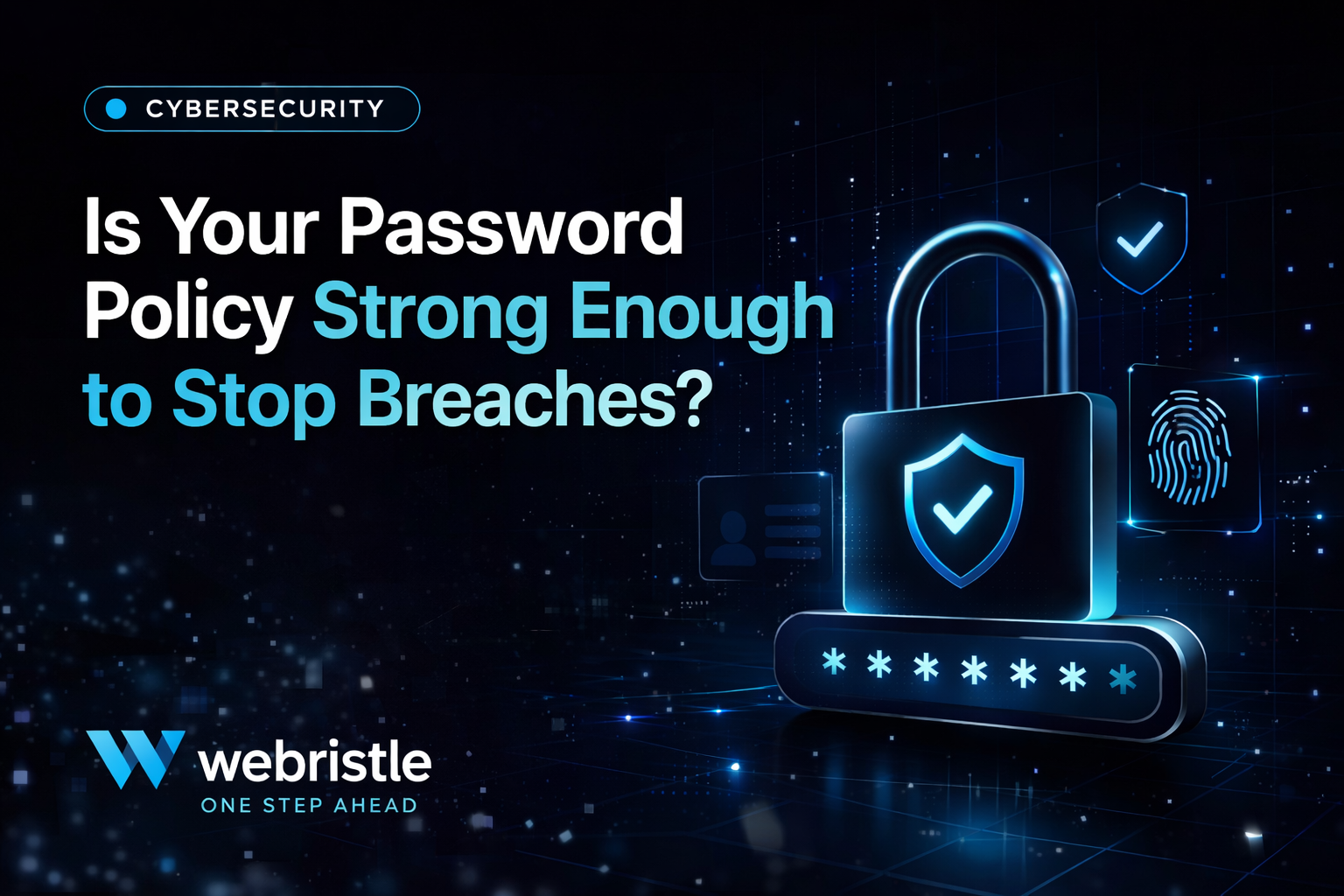
A well-defined corporate password policy sets the minimum standards every employee must follow when creating and managing their credentials. Here are the key components every policy should include:
1. Password Complexity Requirements
Passwords should meet a minimum level of complexity to resist brute force and dictionary attacks. A strong corporate password should:
- Be at least 12 to 16 characters in length
- Include a mix of uppercase and lowercase letters
- Contain at least one number and one special character (e.g., @, #, $, %)
- Avoid predictable patterns such as Password123! or Company2024
- Not include personal information like names, birthdays, or company names
2. Regular Password Changes
While some cybersecurity experts have revised their guidance on mandatory password changes, it is still considered a best practice to require password updates when:
- A suspected or confirmed breach has occurred
- An employee leaves the company or changes roles
- Shared credentials have been exposed or mishandled
3. Password Reuse Prevention
Employees should be strictly prohibited from reusing previous passwords. Systems should be configured to remember at least the last 10 passwords to prevent cycling back to compromised credentials.
Implementing Multi-Factor Authentication (MFA)
Multi-Factor Authentication (MFA) is one of the single most effective controls a business can implement to protect corporate accounts. Even if a password is compromised, MFA adds an additional layer of verification that prevents unauthorized access.
Common MFA methods include:
- Time-based one-time passwords (TOTP) via apps like Google Authenticator or Microsoft Authenticator
- SMS verification codes sent to registered mobile numbers
- Hardware security keys such as YubiKey for high-privilege accounts
- Biometric authentication including fingerprint or facial recognition
- Push notifications through dedicated authentication applications
Organizations should enforce MFA for all critical systems, including email, VPN access, cloud platforms, and any administrative portals.
Using a Business Password Manager
One of the biggest challenges in corporate environments is that employees often struggle to remember multiple complex passwords, leading them to reuse or simplify their credentials. A business password manager solves this problem by securely storing and autofilling credentials across all platforms.
Key benefits of enterprise password managers include:
- Centralized credential storage with end-to-end encryption
- Password generation that automatically creates strong, unique passwords
- Role-based access control to share credentials securely between teams
- Audit logs that track who accessed which credentials and when
- Dark web monitoring to detect if corporate credentials have been leaked
Popular enterprise password managers include 1Password Business, LastPass Enterprise, Bitwarden for Business, and Keeper Security.
Privileged Access Management (PAM)
For organizations with sensitive infrastructure, Privileged Access Management (PAM) goes beyond standard password policies. PAM solutions manage, monitor, and secure access to critical systems for users with elevated permissions such as IT administrators, database managers, and system architects.
A PAM strategy should include:
- Just-in-time access — granting elevated privileges only when needed and revoking them immediately after
- Session recording — monitoring and logging all privileged sessions for audit purposes
- Credential vaulting — storing privileged credentials in a secure, encrypted vault
- Least privilege principle — ensuring users only have the minimum access required to perform their tasks
Employee Training and Security Awareness
Technology alone cannot secure an organization. Human error remains the leading cause of security incidents, which is why regular employee training is essential. A comprehensive security awareness program should cover:
- How to recognize phishing emails and social engineering attacks
- The importance of using unique passwords for each account
- Proper procedures for reporting suspicious activity
- How to use the company's password manager effectively
- The risks of sharing credentials, even within the same team
Regular simulated phishing exercises can help measure employee awareness levels and identify individuals who may need additional training.
Single Sign-On (SSO) Integration
Single Sign-On (SSO) allows employees to authenticate once and gain access to multiple applications without needing to enter separate credentials each time. When combined with MFA, SSO can significantly reduce password fatigue while maintaining strong security controls.
Benefits of SSO for enterprises include:
- Reduced risk of password reuse across multiple applications
- Faster and more convenient access for employees
- Centralized management of user authentication
- Easier deprovisioning of accounts when employees leave the organization
Monitoring, Auditing, and Incident Response
Even with the best policies in place, businesses must actively monitor for signs of credential compromise. Implementing a Security Information and Event Management (SIEM) system can help detect anomalous login behavior, such as multiple failed login attempts, logins from unusual geographic locations, or access at unusual hours.
An effective incident response plan for password-related breaches should include:
- Immediate credential revocation for compromised accounts
- Forced password resets across affected systems
- User notification and communication protocols
- Forensic investigation to determine the scope and origin of the breach
- Post-incident review to strengthen existing policies
The Future of Corporate Password Security: Moving Toward Passwordless Authentication
Looking beyond 2026, the cybersecurity industry is increasingly moving toward passwordless authentication solutions. Technologies such as FIDO2, passkeys, and biometric-based authentication are gaining widespread adoption among major technology platforms including Microsoft, Google, and Apple.
While a fully passwordless enterprise environment may still be years away for many organizations, businesses should begin exploring and piloting these technologies today to stay ahead of the evolving threat landscape.
Conclusion: Building a Password-Secure Organization
Implementing strong corporate password security practices requires a multi-layered approach that combines technology, policy, and people. By enforcing complexity requirements, deploying MFA, leveraging password managers, implementing PAM, and investing in employee training, organizations can dramatically reduce their exposure to credential-based attacks.
In 2026 and beyond, the cost of neglecting password security far outweighs the investment required to implement these best practices. Start building your organization's password security framework today — because in the world of cybersecurity, it is always better to be proactive than reactive.