Deepfake CEO Fraud: When Your Boss's Voice Is Fake
Imagine receiving a phone call from your CEO. The voice is unmistakably his — the same tone, the same accent, the same way he pauses before making an important request. He asks you to urgently transfer a large sum of money to a new supplier account. You hesitate for a moment, but it sounds exactly like him. So you comply. Days later, you discover your company has been defrauded of hundreds of thousands of dollars — and the voice on that call was never your boss at all.
This is the terrifying reality of Deepfake CEO Fraud, one of the most sophisticated and rapidly growing forms of cybercrime targeting businesses today. Combining artificial intelligence, voice cloning technology, and classic social engineering tactics, cybercriminals are now capable of impersonating top executives with frightening accuracy — and the financial consequences can be devastating.
What Is Deepfake CEO Fraud?
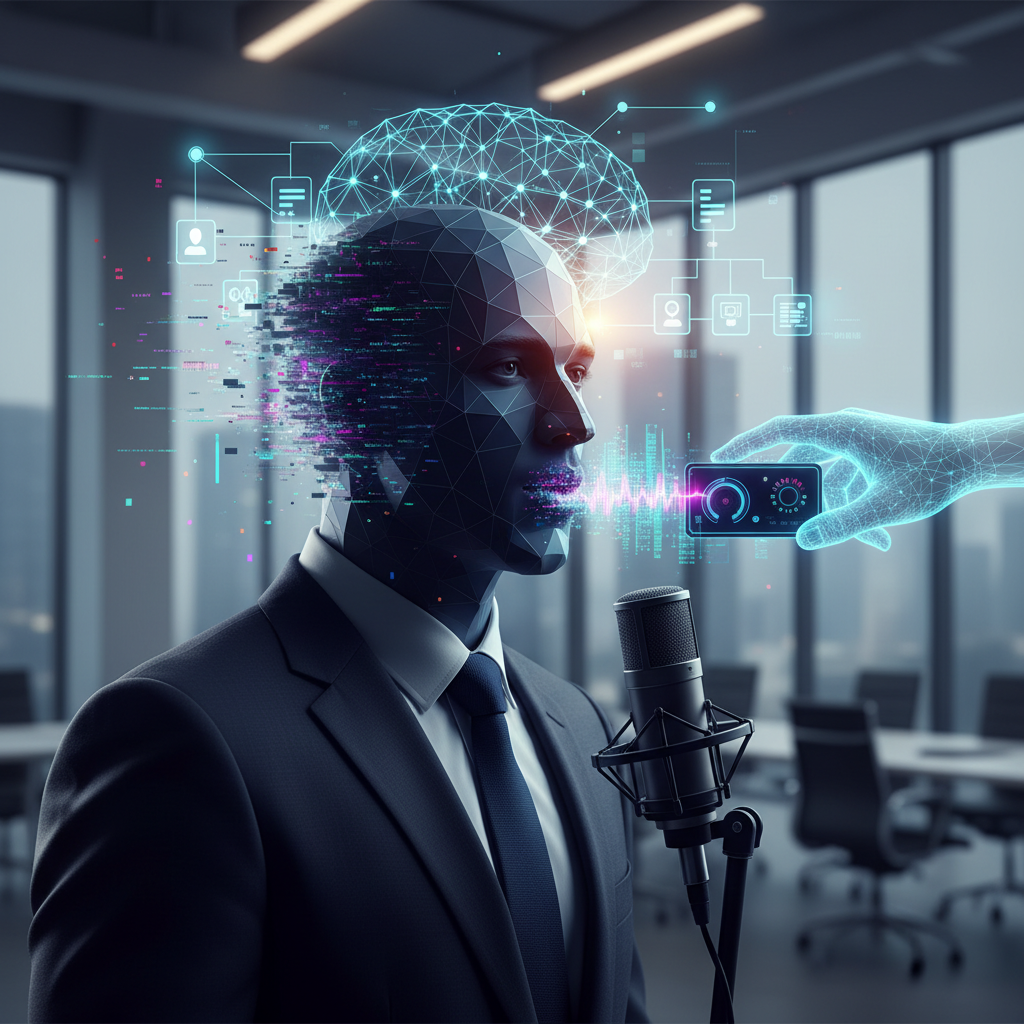
Deepfake CEO Fraud — also known as Business Email Compromise (BEC) evolved or Voice Phishing (Vishing) with AI — is a type of cyberattack in which criminals use artificial intelligence to clone the voice (or even the video image) of a company's top executive, typically the CEO or CFO, to trick employees into making unauthorized wire transfers, sharing sensitive credentials, or leaking confidential information.
Unlike traditional phishing emails that can be spotted through poor grammar or suspicious links, deepfake audio and video attacks are alarmingly convincing. The AI models used to generate fake voices are trained on publicly available recordings — interviews, podcasts, conference talks, YouTube videos — meaning any executive with a public presence is potentially at risk of being impersonated.
How the Attack Works: A Step-by-Step Breakdown
- Target identification: Attackers identify a high-value company and research its organizational structure, focusing on who has financial authorization.
- Voice data collection: Using publicly available audio and video content, they gather enough voice samples of the target executive to train an AI voice cloning model.
- Scenario crafting: A believable and urgent scenario is created — an emergency wire transfer, a confidential acquisition, a last-minute payment to avoid a legal issue.
- The attack call: The fraudster calls the targeted employee (usually in finance or accounting) using the AI-generated voice, often combined with a spoofed phone number.
- Execution: The employee, believing they are speaking to their actual boss, follows the instructions — transferring money or sharing sensitive data.
- Disappearance: Funds are quickly moved through multiple accounts, often internationally, making recovery nearly impossible.
Real-World Examples of Deepfake CEO Fraud
This is not a theoretical threat. Documented cases of deepfake voice fraud are already costing organizations millions of dollars every year.
- In 2019, a UK-based energy company lost approximately €220,000 after its CEO was impersonated using AI-generated voice technology. The fraudulent call instructed a senior employee to transfer funds to a Hungarian supplier — urgently.
- In 2020, a Hong Kong bank manager was tricked into approving a $35 million transfer following a series of deepfake voice calls that impersonated a company director he had previously spoken with.
- Multiple cases in the United States have been reported to the FBI involving cloned executive voices used to authorize fraudulent payroll changes and vendor payments.
These cases are not isolated incidents. As AI tools become cheaper and more accessible, the barrier to entry for this type of fraud is dropping dramatically — meaning even smaller companies are now at risk.
Why Traditional Security Measures Are Not Enough
Most organizations have implemented email filters, antivirus software, and multi-factor authentication. But deepfake CEO fraud bypasses all of these. It doesn't arrive via email. It doesn't contain a malicious link. It doesn't trigger any automated alert. It exploits the most fundamental human vulnerability: trust in authority.
When an employee hears what they believe is their CEO's voice — especially in a stressful, urgent situation — their critical thinking is often overridden by the instinct to comply. This is precisely why social engineering attacks remain so effective, and why purely technical defenses are insufficient on their own.
The Psychology Behind the Scam
Deepfake CEO fraud is effective because it exploits several well-documented psychological principles:
- Authority: People are conditioned to follow instructions from those in positions of power.
- Urgency: Artificial time pressure prevents employees from stopping to verify the request through other channels.
- Familiarity: Hearing a known voice triggers an automatic sense of trust that is difficult to override consciously.
- Fear of consequences: Employees may worry about questioning or delaying their boss's "urgent" request.
Understanding these mechanisms is the first step toward building a resilient human firewall within your organization.
How to Protect Your Organization from Deepfake CEO Fraud
Defending against deepfake voice attacks requires a multi-layered approach that combines technology, process, and — most critically — human awareness and training.
1. Implement Strict Verification Protocols
No financial transaction above a defined threshold should ever be approved based on a single phone call, regardless of who appears to be calling. Establish dual-authorization procedures requiring written confirmation through a secondary verified channel before any funds are transferred.
2. Create a "Call-Back" Culture
Train employees to always hang up and call back the requester using a number that is independently verified — not the one provided during the suspicious call. This simple step can stop the vast majority of vishing and deepfake voice attacks in their tracks.
3. Use Code Words or Passphrases
Some organizations are introducing internal verbal passphrases that executives and employees use to verify identity during sensitive phone calls. While not foolproof, this adds an additional layer of friction for attackers.
4. Monitor and Limit Public Voice Exposure
Review how much audio and video content featuring company executives is publicly accessible online. Consider adding disclaimers to public content and limiting unnecessary recordings where possible.
5. Invest in Employee Cybersecurity Training
This is arguably the most critical defense. Technology alone cannot stop a deepfake attack — but a well-trained, security-aware workforce can. Employees must be educated to recognize the warning signs of social engineering, understand how deepfake technology works, and feel empowered to question unusual requests — even from apparent authority figures.
At Webristle, we offer comprehensive cybersecurity training programs specifically designed to prepare your team against modern threats like deepfake CEO fraud, phishing, vishing, and advanced social engineering attacks. Our training is tailored to your industry and organizational needs, combining real-world simulations with expert-led sessions that build lasting behavioral change — not just temporary awareness.
If your organization operates in multiple languages or regions, our training is also available in Italian and Spanish, ensuring every member of your team receives the same high-quality security education in their native language.
Red Flags Employees Should Recognize
Training your staff to spot the warning signs of a deepfake CEO fraud attempt is essential. Here are the key indicators to watch for:
- An unexpected call requesting urgent financial action or data sharing
- Requests to bypass normal approval processes "just this once"
- Instructions to keep the transaction confidential from other colleagues
- Slight audio distortions, unnatural pauses, or robotic-sounding speech
- Pressure to act immediately without time to verify
- Requests involving new or unfamiliar bank accounts
- A caller who seems unusually insistent or aggressive when questioned
Even if none of these red flags are individually definitive, their combination should trigger immediate pause and independent verification.
The Role of Leadership in Building a Fraud-Resistant Culture
One of the most powerful defenses against deepfake CEO fraud is organizational culture. When leadership actively promotes a speak-up culture — where employees feel safe questioning unusual requests without fear of reprimand — the entire organization becomes more resilient.
Leaders should explicitly and regularly communicate that it is not only acceptable, but expected, for employees to verify financial requests through official channels, even when the request appears to come from the top. This cultural shift removes the social pressure that attackers exploit so effectively.
The Future Threat Landscape: It Will Only Get Worse
As AI technology continues to advance, deepfake capabilities will become even more convincing and more accessible. We are already seeing the emergence of real-time deepfake video tools that can impersonate executives during live video calls — taking this threat to an entirely new level.
Regulatory bodies and law enforcement agencies are working to address this evolving threat, but the pace of technological development means that organizations cannot afford to wait for external solutions. Proactive preparation is the only effective strategy.
Conclusion: Your Human Layer Is Your Strongest Defense
Deepfake CEO fraud represents a sobering evolution in cybercrime — one that exploits not just technical vulnerabilities, but the deepest human instincts of trust and obedience. No firewall or spam filter can protect against a perfectly cloned executive voice delivering a convincing, urgent request. Only a well-informed, critically thinking workforce can.
Investing in high-quality cybersecurity awareness training is no longer optional for organizations that want to remain secure in today's threat landscape. It is a business imperative. Whether your team speaks English, Italian, or Spanish, Webristle is ready to equip your people with the knowledge and skills they need to recognize and resist even the most sophisticated deepfake attacks.
Don't wait for a fraudulent wire transfer to wake your organization up to this threat. Start building your human firewall today with our dedicated cybersecurity training services — also available in Italian and Spanish.